
What Is Amoxil Capsule?
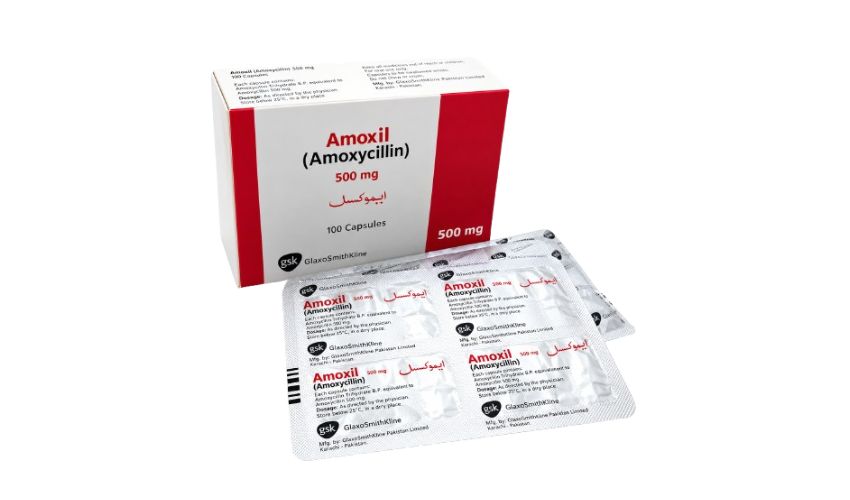
Amoxil is one of Pakistan’s most established brands of amoxicillin, manufactured by GSK. Amoxicillin belongs to the penicillin family of antibiotics and works by interfering with the bacteria’s ability to build their cell walls, which causes the bacteria to die off. It’s considered a first-line antibiotic for many common infections because of its long safety record, broad effectiveness, and relatively low cost.
Unlike Augmentin, which combines amoxicillin with clavulanic acid to overcome bacterial resistance, plain Amoxil contains amoxicillin alone. This makes it effective against bacteria that haven’t developed resistance to standard penicillins, but less effective against resistant strains, which is exactly where Augmentin becomes necessary instead. Your doctor decides which one fits your specific infection.
Amoxil Capsule Uses
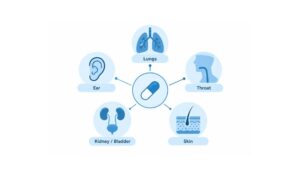
Amoxil is commonly prescribed for:
- Respiratory tract infections: bronchitis, mild pneumonia
- Ear infections (otitis media), especially in children
- Throat infections: tonsillitis, pharyngitis (including strep throat)
- Sinusitis
- Urinary tract infections (UTIs)
- Skin and soft tissue infections
- Dental infections and as a preventive antibiotic before certain dental procedures, when advised by a dentist
- H. pylori eradication, as part of a combination regimen with other medicines, prescribed by a doctor
As with all antibiotics, Amoxil is only effective against bacterial infections. It will not help with the common cold, flu, or most sore throats, which are usually viral.
Amoxil Dosage by Age
The exact dose and duration depend on the type and severity of infection and must be confirmed by your doctor. The table below is a general reference to help you understand a typical prescription.
| Group | Typical Dose | Frequency |
| Adults & children over 40kg | 250mg – 500mg (sometimes up to 1g for severe infections) | Every 8 hours |
| Children (weight-based) | Approximately 20–50mg per kg of body weight per day, divided into doses | Usually every 8 hours |
Children’s syrup guidance:
Amoxil syrup comes in two strengths 125mg/5ml and 250mg/5ml (Forte). The exact volume given depends entirely on the child’s weight and the strength prescribed, which is why pediatricians calculate it individually rather than using a flat age-based chart. Always use the measuring spoon or oral syringe that comes with the syrup, and shake well before each use.
General guidance for taking Amoxil:
- Can be taken with or without food, though food may help if it upsets the stomach.
- Space doses evenly, typically every 8 hours, to maintain a steady level of antibiotic in the body.
- Complete the entire course, even if symptoms improve within 2–3 days. Stopping early is a leading cause of antibiotic resistance and can let the infection return.
- Reconstituted syrup should be refrigerated and discarded after the period stated on the label (usually 7–14 days).
Amoxil Side Effects
Common:
- Diarrhoea (one of the most frequently reported effects, especially at higher doses)
- Nausea or vomiting
- Skin rash
Less common:
- Headache
- Vaginal itching or thrush
- Indigestion
Serious: seek medical attention immediately if you notice:
- Signs of a severe allergic reaction: facial or throat swelling, difficulty breathing, or a widespread, raised rash. Amoxicillin is a penicillin, and penicillin allergy is one of the more common drug allergies
- A rash accompanied by fever and swollen glands (can indicate a more serious reaction and needs prompt medical review)
- Severe or watery diarrhoea that continues after stopping the medicine
- Yellowing of the skin or eyes, dark urine, or unusual tiredness (possible liver involvement, rare but reported)
Who Should Be Cautious or Avoid Amoxil
- Anyone with a known penicillin or cephalosporin allergy should not take Amoxil without discussing it with a doctor first.
- People with a history of amoxicillin-related liver problems should avoid it.
- People with kidney disease may need a dose adjustment.
- People with infectious mononucleosis (glandular fever): amoxicillin can cause a widespread rash in this condition and is usually avoided.
- Pregnant and breastfeeding women should only take Amoxil if prescribed by their doctor.
- Tell your doctor about any other medicines you take, especially methotrexate or allopurinol, since interactions are possible.
Amoxil Price in Pakistan
| Pack | Approximate Price (PKR) |
| Amoxil 500mg — strip of 10 capsules | Rs. 180 – 285 |
| Amoxil 250mg — strip of 10 capsules | Lower than the 500mg strength; confirm with your pharmacy |
| Amoxil Syrup 125mg/5ml (90–100ml) | Rs. 99 – 130 |
| Amoxil Forte Syrup 250mg/5ml (90ml) | Rs. 187 – 193 |
Prices vary by pharmacy, city, and pack size, and are revised periodically.
Amoxil vs Augmentin: Which One Will Your Doctor Prescribe?
- Amoxil (amoxicillin alone) is used when the infecting bacteria are not expected to be resistant; it’s simpler and usually cheaper.
- Augmentin (amoxicillin + clavulanic acid) is used when you need broader coverage or when standard penicillins are likely to fail because of bacterial resistance.
Your doctor chooses based on the type and severity of your infection, local resistance patterns, and your medical history; this isn’t something to decide for yourself.
FAQs
Amoxil is an antibiotic and should only be used under a doctor’s prescription.
Amoxil contains amoxicillin alone, while Augmentin adds clavulanic acid, which helps amoxicillin work against bacteria that would otherwise resist it.
Capsules are for adults and older children who can swallow them. Younger children are usually given the oral syrup, dosed strictly by body weight.
Take it as soon as you remember, unless it’s almost time for the next dose; in that case, skip the missed one and continue your normal schedule. Don’t double up.
No. Complete the full prescribed course even if symptoms improve after a couple of days, to fully clear the infection and reduce the risk of resistance.