
What Concor Actually Is
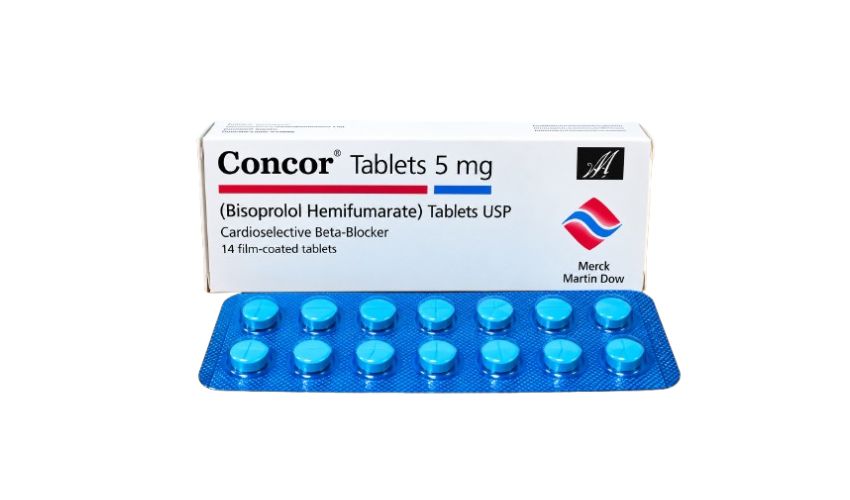
Concor’s active ingredient is bisoprolol, a selective beta-1 blocker, manufactured in Pakistan by Martin Dow/Merck. “Selective” matters here: bisoprolol mainly targets beta-1 receptors, found largely in the heart, rather than beta-2 receptors found in the lungs and blood vessels elsewhere. This selectivity is why it’s often preferred over older, non-selective beta-blockers in people who also have certain lung conditions, though caution is still needed.
By blocking these receptors, bisoprolol reduces the effect of adrenaline-type hormones on the heart; this slows the heart rate, reduces the force of each heartbeat, and lowers blood pressure, all of which reduce the heart’s workload.
The One Rule You Must Never Break: Don’t Stop Suddenly
Before anything else, this is the single most important thing to understand about Concor:
Never stop taking Concor abruptly, even if you feel completely fine. Suddenly stopping a beta-blocker can cause a dangerous rebound effect: your heart rate and blood pressure can spike, chest pain (angina) can worsen or trigger a heart attack in susceptible people, and heart rhythm problems can flare up. This is especially risky in people with existing heart disease.
If you need to stop Concor for any reason side effects, surgery, pregnancy, or simply because you feel you don’t need it anymore your doctor will taper the dose down gradually over one to two weeks (or longer), rather than stopping it in one step. If you miss this medicine for a few days unintentionally, contact your doctor rather than deciding on your own whether to restart at the same dose or stop altogether.
Is Your Dose Right? A Quick Guide to How Concor Is Dosed
Bisoprolol dosing varies more than most medicines because it depends heavily on which condition is being treated and how your body responds. Here’s the general pattern:
For high blood pressure (hypertension): Usually started at 2.5mg or 5mg once daily, and may be increased to 10mg, and in some cases up to 20mg once daily, based on your blood pressure response.
For heart failure: Started at a very low dose (often 1.25mg) and increased extremely gradually, sometimes over weeks to months, under close medical supervision, because starting too high can worsen heart failure symptoms initially. This is one condition where self-adjusting the dose is particularly dangerous.
For angina or heart rhythm control: Typically 5mg to 10mg once daily, adjusted based on heart rate and symptom response.
In kidney impairment: Your doctor may start at a lower dose (such as 2.5mg) if your kidney function is significantly reduced, since bisoprolol is partly cleared through the kidneys.
However you take it:
- Take it at the same time each day, typically in the morning.
- It can be taken with or without food.
- Swallow the tablet whole with water.
- Don’t double up if you miss a dose; just take the next one at its usual time, unless your doctor says otherwise.
This is general background information, not a dosing instruction. Your prescribed dose is specific to you and should never be adjusted without your doctor’s input.
What Side Effects Should Actually Worry You?
Expected and usually manageable:
- Feeling tired or having less energy, especially in the first few weeks; this often improves as your body adjusts
- Cold hands or feet (reduced blood flow to extremities is a known beta-blocker effect)
- Dizziness, especially when standing up quickly
- Slower heart rate than you’re used to (this is often the intended effect, within a safe range your doctor monitors)
- Vivid dreams or mild sleep disturbance in some people
Worth mentioning to your doctor, not necessarily an emergency:
- Low mood or unusual fatigue that doesn’t improve
- Reduced exercise tolerance beyond what’s expected
- Cold-feeling extremities that are bothersome
Needs prompt medical attention:
- Very slow heart rate with dizziness, fainting, or severe weakness
- Shortness of breath that’s new or worsening, or swelling in the legs/ankles (can indicate the heart isn’t tolerating the dose well)
- Wheezing or new breathing difficulty, especially in anyone with a history of asthma
- Signs of a severe allergic reaction: facial swelling, rash, difficulty breathing
Does This Apply to You? Key Precautions
If you have asthma or COPD, talk to your doctor carefully before starting. Bisoprolol is more heart-selective than older beta-blockers. It can still trigger airway narrowing in susceptible people, especially at higher doses.
If you have diabetes, beta-blockers can mask some of the early warning signs of low blood sugar (like a racing heart), so you may need to rely more on checking your blood sugar directly rather than symptoms alone.
If you have a naturally slow heart rate or certain heart block conditions, Concor may not be suitable, or will need very careful monitoring.
Pregnant or breastfeeding, beta-blockers are used in some pregnancies under specialist cardiac or obstetric supervision, but this is never a decision to make without your doctor.
If you’re having surgery, tell your anesthesiologist and surgical team that you’re on Concor; it is usually continued through surgery, but this should always be confirmed with your care team rather than assumed.
If you take other blood pressure or heart medicines, combining beta-blockers with certain calcium channel blockers or other heart-rate-lowering drugs needs careful medical coordination to avoid the heart rate or blood pressure dropping too low.
What Concor Costs in Pakistan
| Pack | Approximate Price (PKR) |
| Concor 2.5mg — strip of 14 tablets | Rs. 120 – 175 |
| Concor 5mg — strip of 14 tablets | Rs. 240 – 338 |
| Concor 10mg — strip of 14 tablets | Rs. 410 – 452 |
Prices vary by pharmacy, city, and ongoing manufacturer revisions. Please confirm the current price at your local pharmacy before buying.
Keeping Track of Your Numbers
Concor is almost always prescribed around a blood pressure or heart rate target. It helps to actually know what those numbers mean day to day. We cover this in detail in a dedicated guide on what counts as a normal blood pressure range for adults. This is worth reading alongside this one if you’re newly diagnosed with hypertension.
If your doctor has also prescribed a cholesterol-lowering medicine alongside Concor. Which is common when managing overall cardiovascular risk, our guide on Lipiget tablet uses, side effects, and price covers that combination in detail.
FAQs
No, this is the single most important warning about this medicine. Stopping suddenly can cause a dangerous rebound in heart rate, blood pressure, and chest pain.
Yes, fatigue is a common effect, especially in the first few weeks. For many people, it improves with time.
Discuss this carefully with your doctor first. Bisoprolol is more heart-selective than older beta-blockers.
Usually in the morning, taken at the same time every day.
It’s designed to slow the heart rate as part of its effect, but your doctor sets a target range and monitors it.