

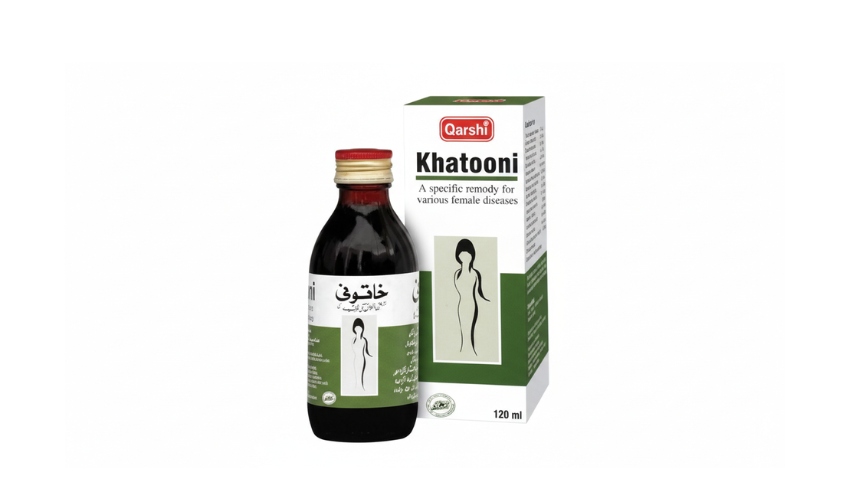
Khatooni syrup is a traditional herbal/Unani tonic for women’s health, commonly used to aid in the menstrual cycle and certain uterine or pelvic discomforts. It is generally presented as a helpful option for symptoms related to irregular cycles, lower abdominal cramps, and uterine inflammation or discharge. The product description for this preparation typically lists menstrual irregularities, painful menstruation, uterine inflammation, and leucorrhoea (excessive vaginal discharge) among its indications.
Even though it is an herb, it should be treated with caution. Menstrual problems can be caused by many different conditions, such as anaemia, thyroid problems, PCOS (Polycystic Ovary Syndrome), infections, or medication side effects, and persistent symptoms warrant evaluation by a gynaecologist. Herbal products can also interact with medications, and pregnancy or breastfeeding are special cases where safety data for many herbs are often limited.
What is khatooni syrup?
Khatooni syrup is commonly described as a gynaecological or uterine tonic in traditional medicine. A well-known commercially available product is Qarshi Khatooni syrup, sold as an herbal remedy for health problems in women.
This formulation is presented as a combination of herbs that strengthen the tissues of the uterus, help regulate the menstrual cycle, and may provide relief from certain inflammatory or discharge-related conditions. The official product description also includes a composition table “per 10 ml”, showing the ingredient mixture of various herbs and an iron salt.
Khatooni Syrup Uses and Indications
Khatooni syrup uses are commonly support menstrual cycles and symptoms associated with inflammation of the uterus or pelvis. Official product descriptions typically list benefits for menstrual irregularities, painful menstruation, uterine inflammation, and leucorrhea.
Below is a practical, symptom-focused analysis that corresponds to how this tonic is typically presented:
Menstrual irregularities and cycle support
This includes:
- Khatooni syrup for irregular periods
- Khatooni syrup for periods
In traditional use, the goal is often to support a more predictable cycle and ease discomfort around menstruation. However, if irregular bleeding is heavy, prolonged, or new, a medical evaluation is important.
Painful menstruation
Product listings commonly mention painful menstruation and cramping as part of their intended support.
Uterine inflammation and pelvic discomfort
The product description highlights use in problems related to inflammation in female pelvic organs and uterine inflammation.
Leucorrhoea (white discharge)
The official product description also lists leucorrhea among the indications.
IMPORTANT NOTE: Persistent discharge, foul smell, itching, fever, or pelvic pain should be evaluated for infection and other causes.
General weakness and fatigue linked with menstrual issues
Some product descriptions include fatigue and weakness in the list of benefits.
Because heavy menstrual bleeding can contribute to iron deficiency, it is important to note that the dosage indication in this composition includes ferric ammonium citrate (an iron salt).
Abortion‑related concerns
Some product inserts include “abortion problems” in their list of indications. However, Khatooni syrup for abortion should not be regarded as an induction of abortion or a method of dealing with complications without medical supervision. Safe care after miscarriage or induced abortion depends on the circumstances (bleeding, pain, fever, risk of incomplete evacuation) and requires medical guidance.
PCOS and fertility
- Khatooni syrup for pcos (Polycystic Ovary Syndrome)
- Khatooni syrup for conceiving
PCOS and fertility concerns are complex and need medical evaluation (hormones, metabolic health, ovulation assessment). This syrup may be used by some women as a supportive tonic, but it should not replace evidence‑based PCOS care or fertility workups.
Weight loss intent
Khatooni syrup for weight loss
This formulation is not primarily positioned as a weight‑loss syrup. If weight loss is a goal, safer and more reliable approaches include nutrition, activity, sleep, and management of underlying hormonal or metabolic issues.
How Khatooni Syrup Works
Traditional uterine tonics are often described in terms of relieving inflammation, reducing spasms and strengthening the tone of uterine tissue. The official ingredient list describes several ingredient characteristics with properties such as astringent effect (useful for discharge), anti-inflammatory activity, antispasmodic effect (muscle relaxant), and support for menstrual regulation.
A practical way to understand the intended system is:
- Support for uterine and pelvic comfort: Ingredients described as antispasmodic or muscle relaxants may help reduce discomfort such as cramps.
- Support for inflammation and tissue: Ingredients described with anti-inflammatory properties may help irritated tissues.
- Astringent effect for discharge: Traditionally, astringent herbs are used to reduce excessive discharge.
- Support when heavy bleeding contributes to weakness: The formula includes an iron salt component (ferric ammonium citrate), which can be included to meet iron requirements if blood loss is a concern.
Timeline expectations
Herbal tonics usually require consistent use over time rather than a single dose. If symptoms worsen, become severe, or persist beyond 1–2 cycles, clinician evaluation becomes important rather than extending self‑treatment.
Khatooni Syrup Ingredients and Key Benefits
Khatooni syrup ingredients are listed by the manufacturer per 10 ml. The official product page provides a composition table that includes various herbs and ferric ammonium citrate.
The drug information table for the same brand also shows a similar group of herbs at 62.5 mg/10 ml and ferric ammonium citrate 50 mg/10 ml, as well as saccharum base.
Examples of ingredients listed are: babool bark, yarrow, maidenhair fern, chicory seed, banyan aerial roots, fumitory leaf, five‑leaved chaste plant seed, juniper berry, neem leaf, indian catmint, fennel seed, ajwain, madder, black nightshade leaf, and ferric ammonium citrate.

Why the ingredient list matters
- A multi‑herb formula increases the chance of individual sensitivity or allergy.
- Some herbs are traditionally considered to influence menstruation; that becomes especially important for pregnancy planning and pregnancy safety discussions.
- The presence of a sweet base (listed as saccharum base in one product listing) matters for people who need to monitor sugar intake.
Khatooni syrup dosage and administration
Its dosage should follow the product label or a clinician’s advice. On the official product page, the suggested use is listed as 10 ml (2 teaspoons) twice a day for females above 12 years.
A drug information listing also shows an adult dose of 10 ml twice a day.
How to use Khatooni syrup?
A simple administration approach (based on label‑style dosing) is:
- Measure the dose accurately (using a measuring spoon or cup)
- Take it consistently at the same time daily
- Avoid doubling doses to “catch up” after a missed dose
Khatooni syrup side effects
The official product listing includes a statement that it is “free of any side effects.”
In real‑world use, any herbal syrup can still cause side effects in sensitive individuals, especially because multi‑ingredient formulas can trigger allergies or digestive upset. General guidance on herbal medicines notes that safety data for many herbs can be limited, and interactions or side effects are possible, particularly in pregnancy and breastfeeding.
Commonly possible mild reactions
- Mild stomach upset or nausea
- Digestive discomfort (bloating)
- Headache in sensitive individuals
- Mild allergic symptoms (itching, rash)
Serious warning signs
- Severe allergic reaction (swelling, breathing difficulty)
- Heavy bleeding, fainting, or severe pelvic pain
- Fever, foul‑smelling discharge, or worsening infection‑type symptoms
Precautions and Warnings
Pregnancy and conception
- Khatooni syrup for pregnancy and khatooni syrup during pregnancy are sensitive topics because many herbs have limited safety data in pregnancy and breastfeeding.
- Traditional uterine tonics may contain herbs described as influencing menstruation. For pregnancy safety, a clinician should confirm appropriateness before use.
- Avoid self‑starting herbal uterine tonics during pregnancy unless a qualified clinician approves.
Use of Khatooni Syrup during periods
It is a common question.
Can we take Khatooni syrup during periods, depending on the reason for use and the person’s bleeding pattern?
If bleeding is unusually heavy, prolonged, or painful, continuing any uterine tonic without evaluation is not recommended. A clinician should assess for anaemia, fibroids, hormonal causes, or infection.
Breastfeeding
For many herbs, detailed breastfeeding safety data may be limited. Clinical guidance is important before use in lactation.
Medical conditions and medication interactions
Herbal medicines can interact with prescription drugs. There is no universally established interaction statement specifically with Cefiget (cefixime) pairing this herbal syrup with this medicine in the public product listing; however, a pharmacist should review combinations because multi‑herb syrups can affect tolerance, digestion, and in some cases, metabolism. This is especially important if the patient already experiences stomach upset from antibiotics or has a history of medication sensitivity.
Khatooni syrup benefits
Khatooni syrup benefits are typically described as menstrual support, uterine comfort, and discharge‑related relief in women. The official product page highlights benefits including menstrual irregularities, painful menstruation, uterine inflammation, and leucorrhoea.
A practical list of benefits of Khatooni syrup includes:
- Cycle support for irregularity (Khatooni syrup for irregular periods)
- Comfort support during menstruation
- Support in discharge‑type complaints (leucorrhoea)
- Support for uterine inflammation‑type discomfort
Storage and Handling
Khatooni syrup should be kept out of direct sunlight and out of the reach of children. The official product description also mentions keeping it away from sunlight and children, and gives information about the expiration date.
If there is a significant change in colour, smell or taste, or if the packaging has expired, the product should not be used.
Comparison With Other Women’s Health Tonics
Compared with single‑herb syrups, khatooni syrup is a multi‑ingredient uterine tonic that is positioned for menstrual irregularities, painful menstruation, uterine inflammation, and leucorrhoea support.
A key “difference” is that multi‑herb formulas may cover multiple symptom targets, but they also increase the chance of individual sensitivity. Choice should be based on:
- the main symptom (pain, irregularity, discharge, weakness),
- medical history,
- pregnancy status,
- and clinician advice when symptoms are persistent or severe.
FAQs
Khatooni syrup during periods may be used by some women depending on the symptoms and individual tolerance, but heavy bleeding, severe pain, or new cycle changes require medical evaluation rather than self‑treatment continuation.
Herbal tonics usually require consistent use over time. If symptoms persist beyond 1–2 cycles, worsen, or include fever, foul discharge, clinical evaluation is important.
Because safety information for many herbs in pregnancy is limited, khatooni syrup in pregnancy and khatooni syrup during pregnancy should only be considered with clinician approval.
Fertility concerns should be evaluated medically, especially when cycles are irregular or PCOS is suspected. Khatooni syrup for conceiving may be used as supportive care in traditional settings, but it is not a substitute for fertility evaluation.
Khatooni syrup for pcos is sometimes discussed as supportive. PCOS usually needs a broader plan (lifestyle, metabolic assessment, hormone evaluation) guided by a clinician.
How many times we use Khatooni syrup commonly aligns with the label guidance of twice daily dosing (for females above 12 years), unless a clinician advises otherwise.
Khatooni herbal syrup refers to the herbal or unani nature of the formulation, meaning it contains plant‑based ingredients rather than a single pharmaceutical drug.
Disclaimer
This article is written for educational purposes only. The information provided here is not intended as medical advice and should not be used to diagnose, treat, or prevent any health condition. Always consult a qualified healthcare professional or doctor before starting any new medicine, herbal remedy, or treatment plan.


